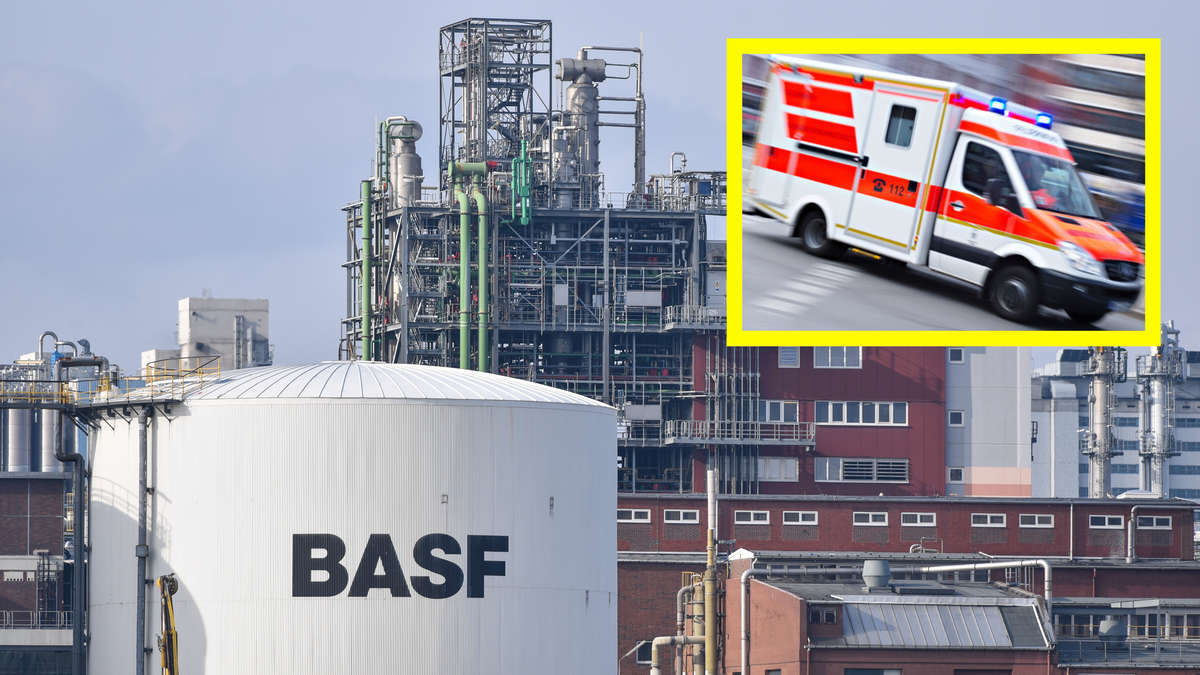
Fire Pipe Incident at BASF Ludwigshafen: Cause Still Unclear
In the vast industrial landscape of BASF's Ludwigshafen site, a significant incident involving a fire extinguishing pipe has once again drawn attention to workplace safety. While the immediate focus remains on the four individuals injured, two of them severely, the underlying cause of this BASF Accidents: Unclear Causes & Worker Safety Concerns incident remains a mystery, prompting investigations and raising crucial questions about operational protocols in large chemical plants.
The term "Arbeitsunfall BASF Werk," meaning "work accident at the BASF plant," unfortunately recurs in headlines, highlighting the inherent risks associated with such complex industrial environments. This recent event serves as a stark reminder of the constant vigilance required to maintain the highest safety standards, particularly when external contractors are involved in critical infrastructure projects.
Details of the Fire Pipe Incident: An Unfolding Mystery
The incident occurred on a Thursday afternoon, April 9th, around 2:45 PM, in the northern part (Werksteil Nord) of the sprawling BASF facility in Ludwigshafen. Four employees of external firms were engaged in critical assembly and sealing work on a newly constructed fire extinguishing ring main. Crucially, this particular section of the pipeline, boasting a substantial diameter of 40 centimeters, was not yet operational and therefore empty, containing no water at the time of the event.
During these routine, yet inherently sensitive, construction activities, the pipe reportedly burst or experienced a sudden failure. The exact mechanism of injury remains vague, with initial reports from BASF stating that the cause is "unclear." This lack of immediate clarity is often characteristic of complex industrial accidents, where a confluence of factors, rather than a single point of failure, may be at play. The incident led to four injuries, two of which were serious enough to require inpatient hospitalisation, while the other two individuals received treatment for minor injuries.
Emergency response was swift, with BASF's own factory medical team providing initial first aid to the injured workers. Subsequently, the severely injured were transferred to clinics for specialized care, and the others received treatment at a local hospital. The responsible regulatory authority, the SGD Süd (Gewerbeaufsichtsbehörde) in Neustadt, has since been informed and has initiated an official investigation into the matter. As a precautionary measure, all construction work at the affected site has been immediately halted, and the area secured and cordoned off pending the findings of the investigation. The focus for now remains on understanding why an empty fire pipe, presumably undergoing standard installation procedures, could lead to such severe consequences.
The Broader Context of Workplace Safety at BASF
While the fire pipe incident at Werksteil Nord is the latest focus, it is not an isolated occurrence within the vast BASF infrastructure. Just days prior, on April 5th, another Arbeitsunfall was reported in the southern part (Werksteil Süd) of the Ludwigshafen plant, where an employee sustained a hand injury on a plant, also from "unclear causes." These incidents, though different in nature, collectively underscore the continuous challenges in maintaining impeccable safety records at large-scale industrial sites.
BASF, as one of the world's leading chemical companies, operates facilities of immense complexity and scale. Its commitment to safety is often highlighted in corporate communications, yet incidents involving both its own employees and, significantly, those of external contractors, continue to occur. The involvement of external firms in these incidents is a critical aspect. Large industrial plants frequently rely on a network of contractors for specialized tasks, maintenance, and construction projects. While this model offers flexibility and expertise, it also introduces additional layers of complexity in safety management.
Ensuring that external companies adhere to the same stringent safety standards as internal teams, that communication channels are clear, and that all personnel are adequately trained and supervised, is paramount. These recent accidents prompt a deeper look into these interfaces, especially when the causes remain elusive. For a comprehensive look at the challenges faced by contractors, refer to our related article: Workplace Safety at BASF: External Firms & Employees Injured. The recurring theme of "unclear causes" in these incidents indicates a need for thorough, transparent investigations that can pinpoint systemic issues rather than simply addressing symptoms.
Investigating Industrial Accidents: A Complex Process
The investigation into an Arbeitsunfall at a facility like BASF is a meticulous and often lengthy process. When the cause of an incident, such as the burst fire pipe, is initially "unclear," investigators face the daunting task of piecing together a multitude of factors that could have contributed to the event. This typically involves several key stages and considerations:
- Site Securement and Evidence Collection: Immediately after the incident, the site is secured to prevent further injury and to preserve evidence. Expert teams then meticulously collect physical evidence, including damaged equipment, tools, and materials.
- Witness Interviews: All personnel present at the time of the incident, including the injured and their colleagues, are interviewed to gather their perspectives and reconstruct the sequence of events.
- Document Review: Investigators examine all relevant documentation, such as work permits, safety procedures, training records, maintenance logs, design specifications for the pipework, and risk assessments conducted prior to the work.
- Technical Analysis: Engineering experts will analyze the failed pipe section to determine the mode of failure – was it due to material defect, incorrect installation, excessive pressure (even when empty, residual pressure or hydraulic shock can occur), fatigue, or external stress?
- Procedural Review: The adherence to standard operating procedures (SOPs) and safety protocols is critically evaluated. Were all steps followed correctly? Were the procedures adequate for the task at hand?
- Human Factors Analysis: This considers potential human errors, misjudgments, or inadequate training that might have played a role.
The complexity arises because industrial accidents rarely have a single, simple cause. Often, it's a chain of events, a combination of technical failure, human error, and systemic deficiencies that culminate in an unfortunate incident. The role of the Gewerbeaufsichtsbehörde, like SGD Süd, is to independently uncover these facts and ensure compliance with occupational safety regulations, ultimately leading to recommendations for preventing future recurrences.
Enhancing Safety Protocols in Large Industrial Settings
Preventing future Arbeitsunfälle at complex industrial sites like BASF requires a multi-faceted approach, encompassing robust safety management systems, continuous training, and a strong safety culture. The incidents at Ludwigshafen serve as a crucial reminder for all stakeholders:
For Companies (like BASF):
- Integrated Safety Management Systems: Implement comprehensive systems that cover all aspects of operations, from design and construction to maintenance and decommissioning. These should be regularly audited and updated.
- Rigorous Contractor Management: Develop stringent vetting processes for external firms, ensuring they meet specific safety qualifications. This includes clear contracts outlining safety responsibilities, mandatory safety inductions, and ongoing performance monitoring.
- Clear Communication and Coordination: Establish unequivocal lines of communication between site management, internal departments, and all external contractors to prevent misunderstandings and ensure all parties are aware of potential hazards.
- Proactive Risk Assessment: Conduct thorough and regular risk assessments for all tasks, especially non-routine work like new installations or major repairs. This should involve input from all levels of personnel.
- Continuous Training and Awareness: Provide comprehensive and recurrent safety training for all employees and contractors, covering site-specific hazards, emergency procedures, and safe work practices.
- Incident Reporting and Learning: Foster a culture where near misses and minor incidents are reported without fear of reprisal. Thoroughly investigate all incidents, regardless of severity, to identify root causes and implement corrective actions. Share lessons learned across the organization.
For External Firms:
- Adherence to Site-Specific Rules: Fully understand and strictly comply with the client's (BASF's) safety rules and procedures, which may be more stringent than general industry standards.
- Employee Training and Certification: Ensure all employees are properly trained for the specific tasks they perform and hold relevant certifications.
- Proper Equipment and PPE: Use only certified and well-maintained equipment, and ensure all employees have and correctly use appropriate Personal Protective Equipment (PPE).
- Hazard Identification: Actively identify and report any unforeseen hazards or unsafe conditions encountered on site.
Ultimately, a strong safety culture, where safety is perceived as a shared responsibility rather than just a compliance checkbox, is the most effective preventative measure. This involves leadership commitment, employee empowerment, and continuous improvement based on lessons from every incident, helping to reduce the occurrence of the dreaded Arbeitsunfall BASF Werk.
Conclusion
The recent fire pipe incident at BASF Ludwigshafen, which left four workers injured and its cause still undetermined, underscores the perpetual challenges of maintaining safety in large industrial complexes. While investigations by authorities like the SGD Süd are ongoing, the incident highlights critical aspects of workplace safety, particularly concerning external contractors and the meticulous nature of industrial infrastructure projects. Learning from such events, clarifying the "unclear causes," and reinforcing comprehensive safety protocols for all personnel, whether internal or external, are paramount. Only through continuous vigilance, rigorous adherence to safety standards, and transparent investigation can industrial giants like BASF strive to prevent future accidents and ensure the well-being of every individual on their extensive premises.